HydraLoq vs. Sodium Polyacrylate: The Difference That Matters
In packaging, agriculture, cold-chain logistics, and hygiene applications, absorbent materials play a critical role in safety, quality, and performance. But as industries shift toward more responsible and sustainable materials, the question becomes: What are we absorbing, and at what environmental cost?
This is where HydraLoq, AquaSol’s next-generation bio-based superabsorbent, delivers a transformative alternative.
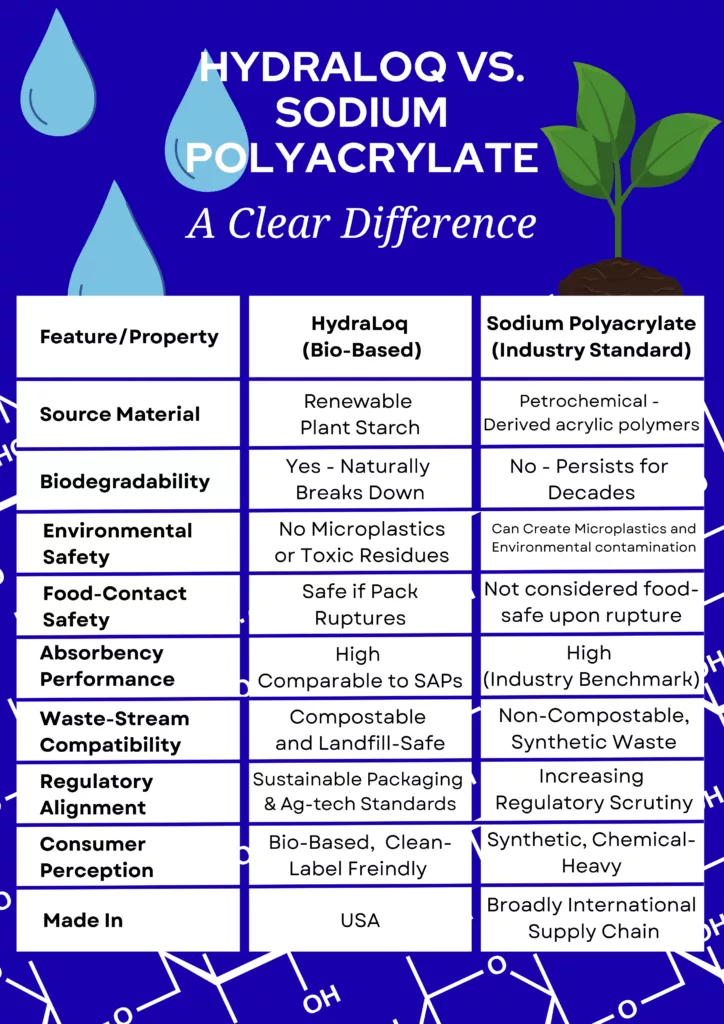
Unlike traditional sodium polyacrylate (SAP), a petrochemical-derived polymer that is non-biodegradable, persistent in the environment, and a known source of microplastic pollution, HydraLoq is created from renewable plant starches. It provides high-performance absorption while supporting a dramatically cleaner environmental profile.
A Clear Material Advantage
The comparison tells an important story:
When performance and sustainability can coexist, choosing synthetic SAPs is no longer the responsible or necessary option.
HydraLoq Delivers:
- ✔ Bio-based, renewable ingredients derived from plant starches
- ✔ True biodegradation, supporting circular waste and compostable systems
- ✔ Food-safe peace of mind, ideal for rupture-risk applications like gel packs and fresh-food packaging
- ✔ High absorbency comparable to traditional sodium polyacrylates
- ✔ Compatibility with eco-friendly packaging and sustainability-driven product design
- ✔ U.S.-based manufacturing, ensuring supply stability and traceability
Designed for the Future
HydraLoq is engineered for brands that prioritize responsible material selection, whether they operate in next-generation packaging, agricultural innovation, cold-chain transport, or consumer product safety.
As global industries move away from persistent petrochemical polymers, HydraLoq provides the scalable, safer, and sustainable pathway forward.
AquaSol, because the future of chemistry isn’t synthetic, it’s sustainable.